Climate and stroke - WSO policy recommendations
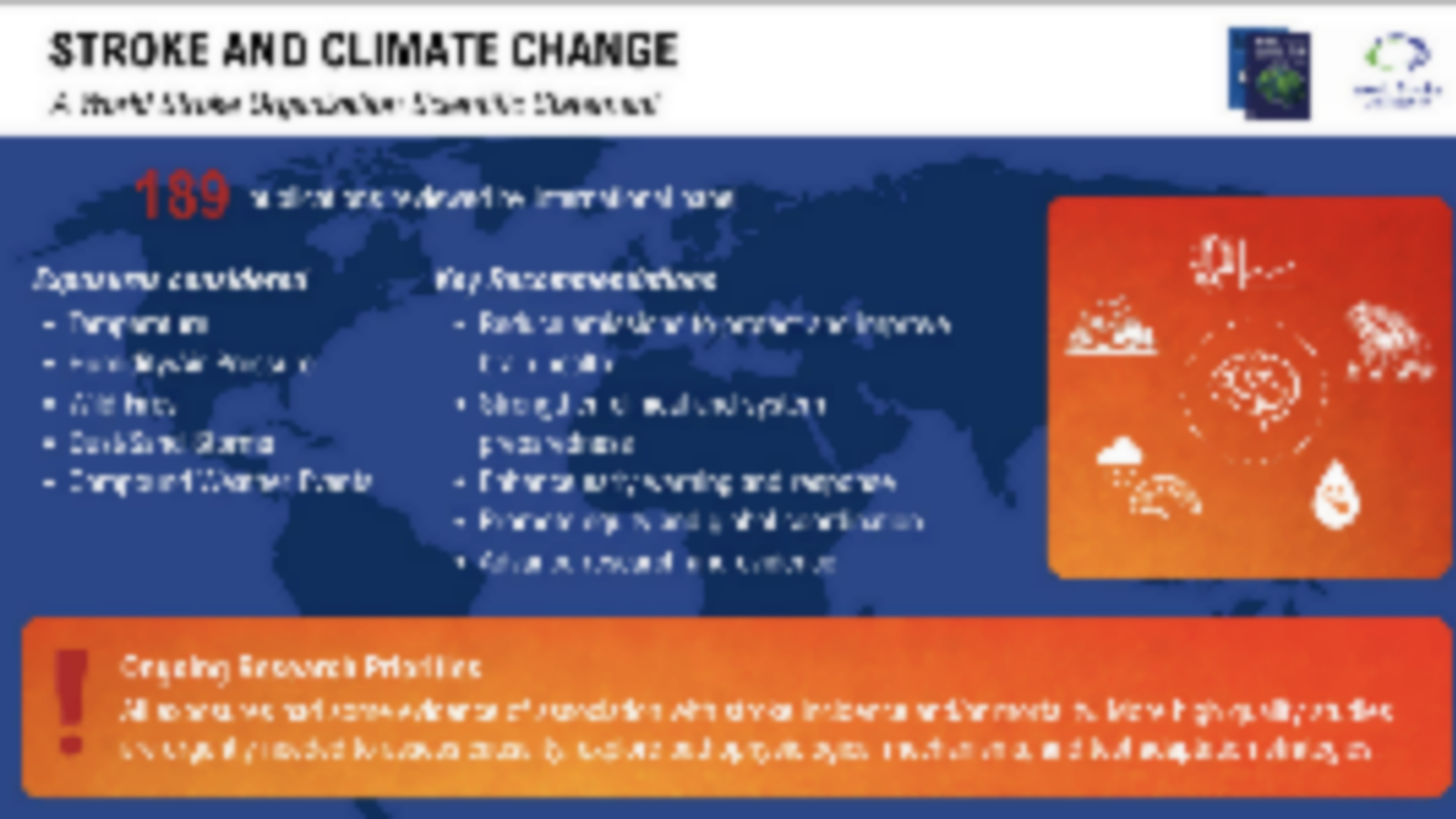
A WSO scientific paper, published in the International Journal of Stroke has identified clear links between climate, stroke risks and outcomes. From extreme temperatures and shifting weather patterns to wildfires and air quality, these changes are already impacting stroke incidence and mortality worldwide. The evidence is increasingly consistent:
- Extreme heat, cold, and temperature variability are associated with higher stroke risk
- Environmental exposures such as wildfire smoke and dust storms increase incidence
- Climate impacts are disproportionately affecting older adults and populations in low- and middle-income countries
At the same time, stroke remains one of the leading causes of death and disability globally — with risk already rising due to modifiable and environmental factors.
Key policy recommendations
1 Step up efforts to cut carbon emissions by promoting clean energy, plant-rich diets and active transport around the world.
2 Educate patients about weather-related impacts on health -
embedding temperature and other climate-related alerts into hospital electronic health records and public messaging.
3 Strengthen interdisciplinary cooperation among meteorological agencies, environmental scientists, urban planners and emergency services to develop coordinated policies for preparedness, early warnings, and responses to climate-related stroke hazards.
The scientific paper was put together by an international panel led by Professor Anna Ranta of the University of Otago, and included experts in climate change and climate medicine, and stroke specialists from New Zealand, Asia, Europe, the Middle East and North Africa, and North and South America.
LAST UPDATE
Friday 1 May 2026
SHARE
More Reading

News
01 May 26
Report sets out economic and public health case for stronger LDL cholesterol control